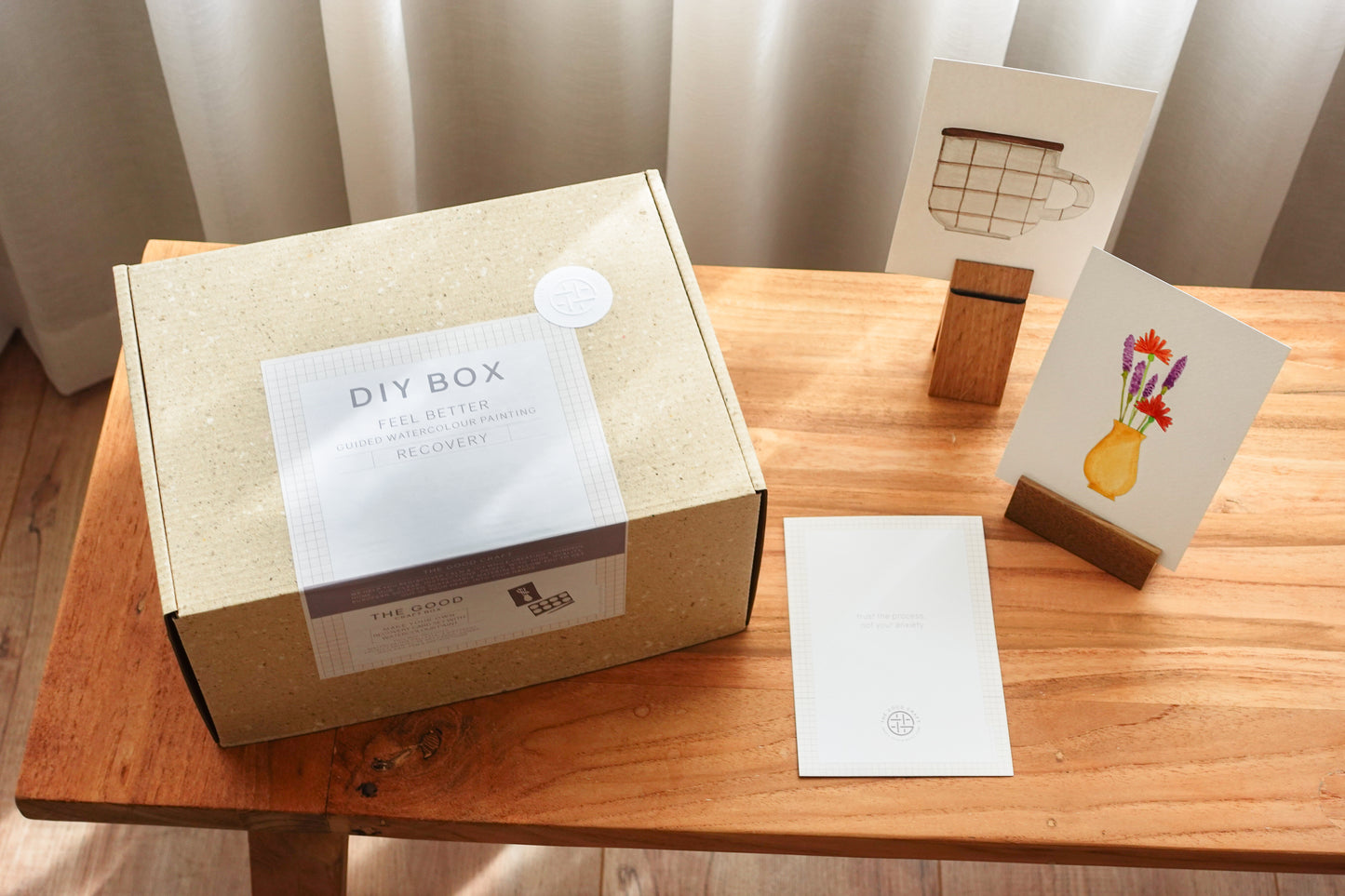
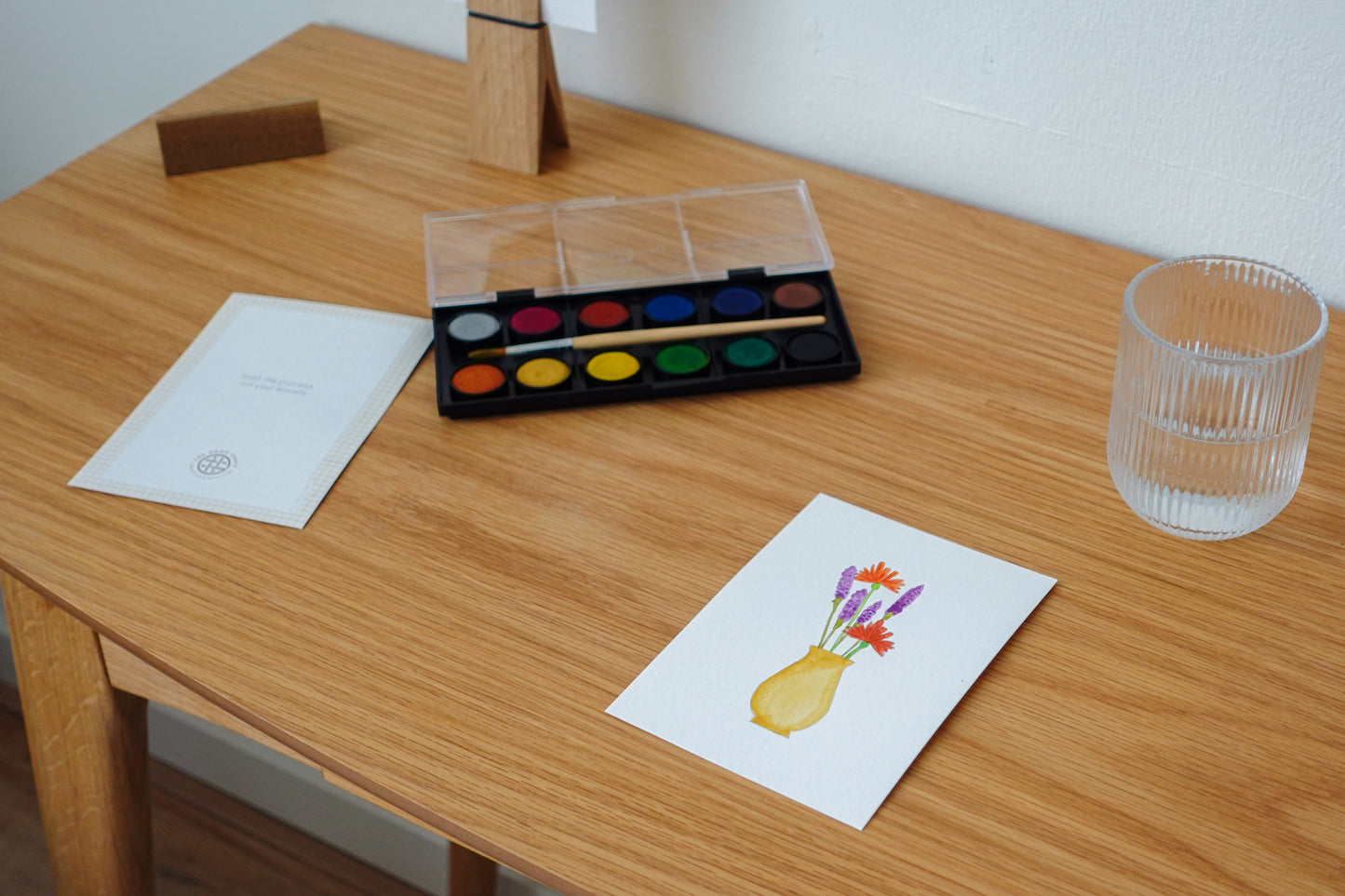
Material list

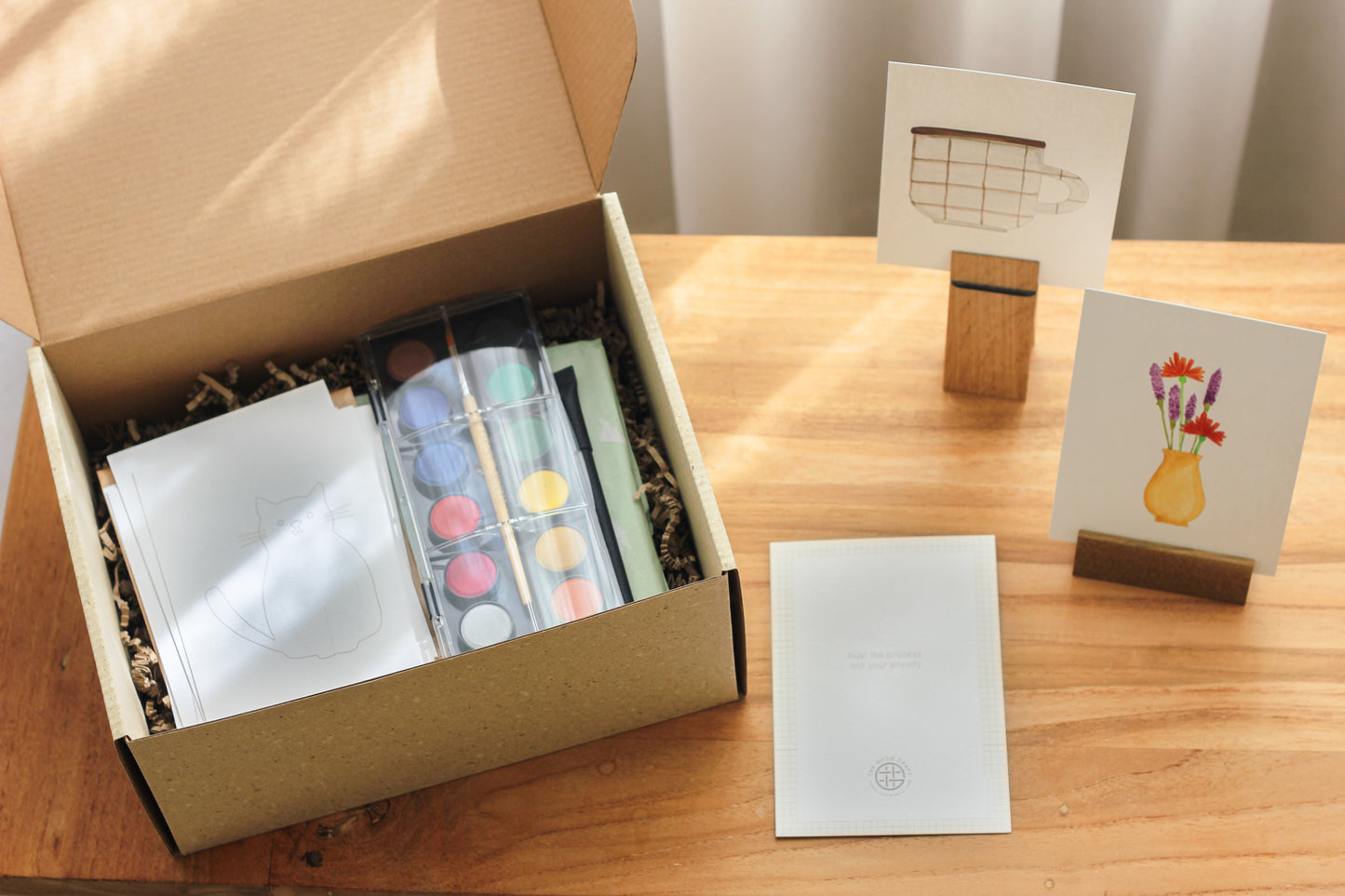
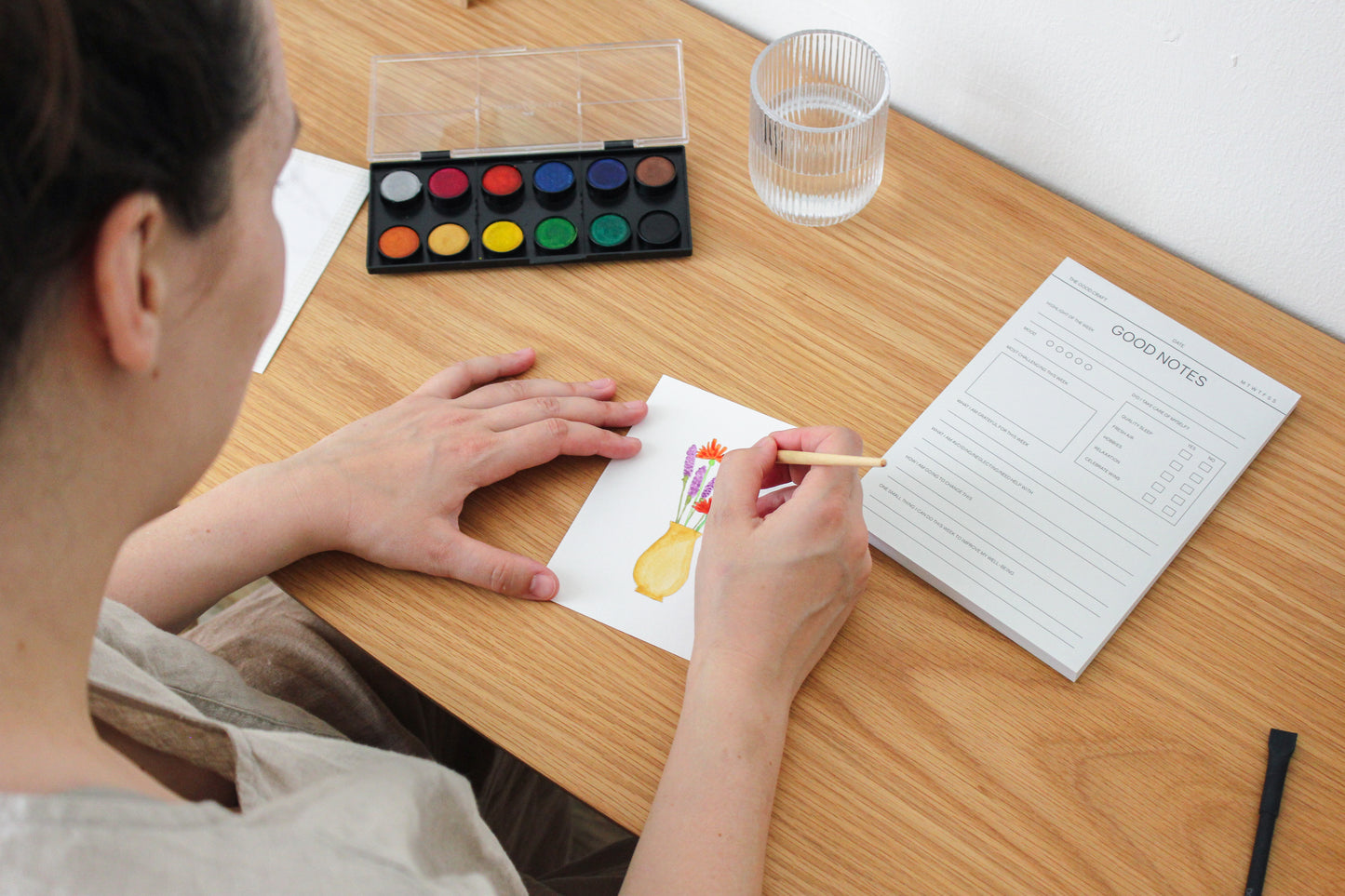
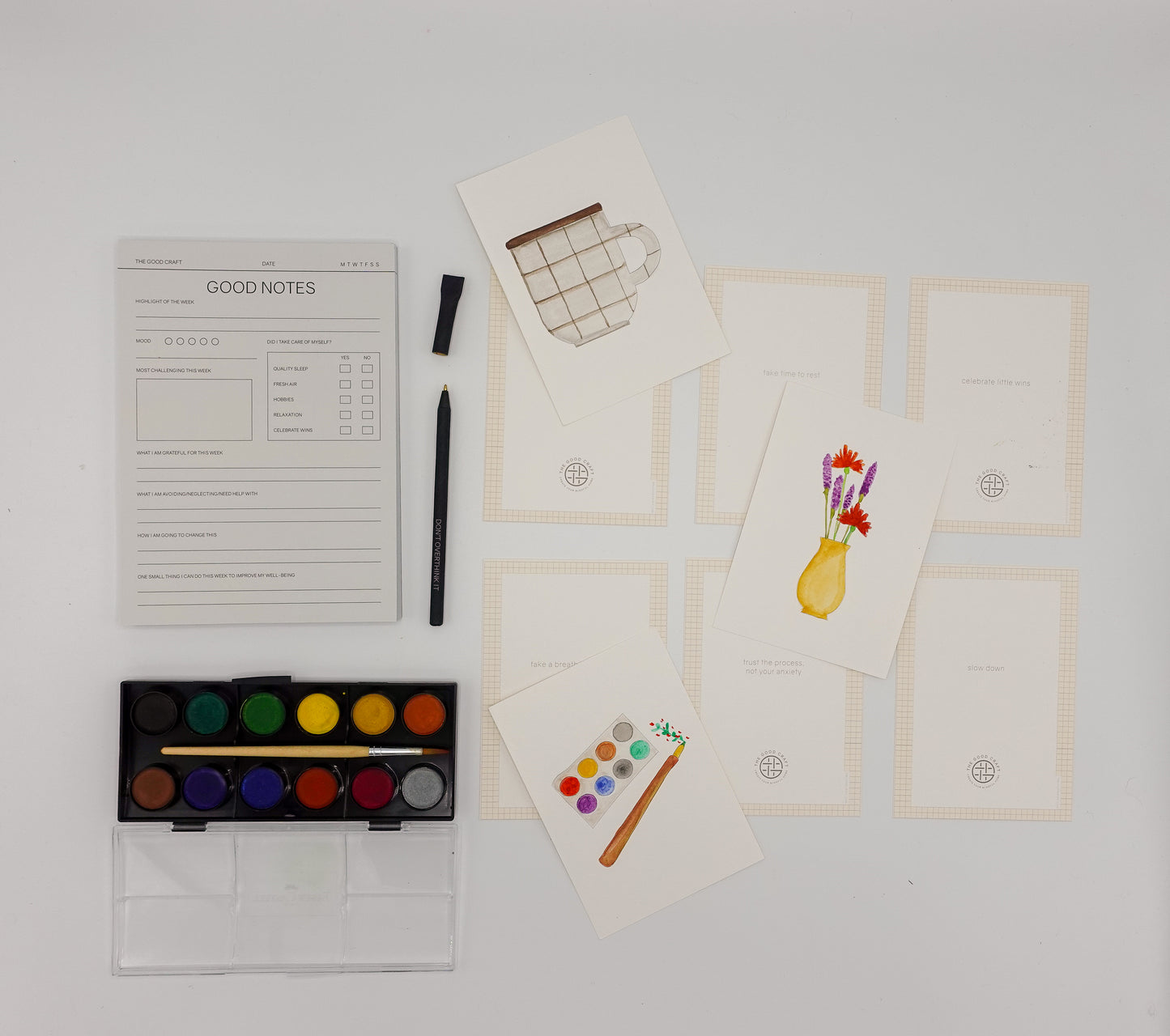
Good notes pad

Don't overthink it pen

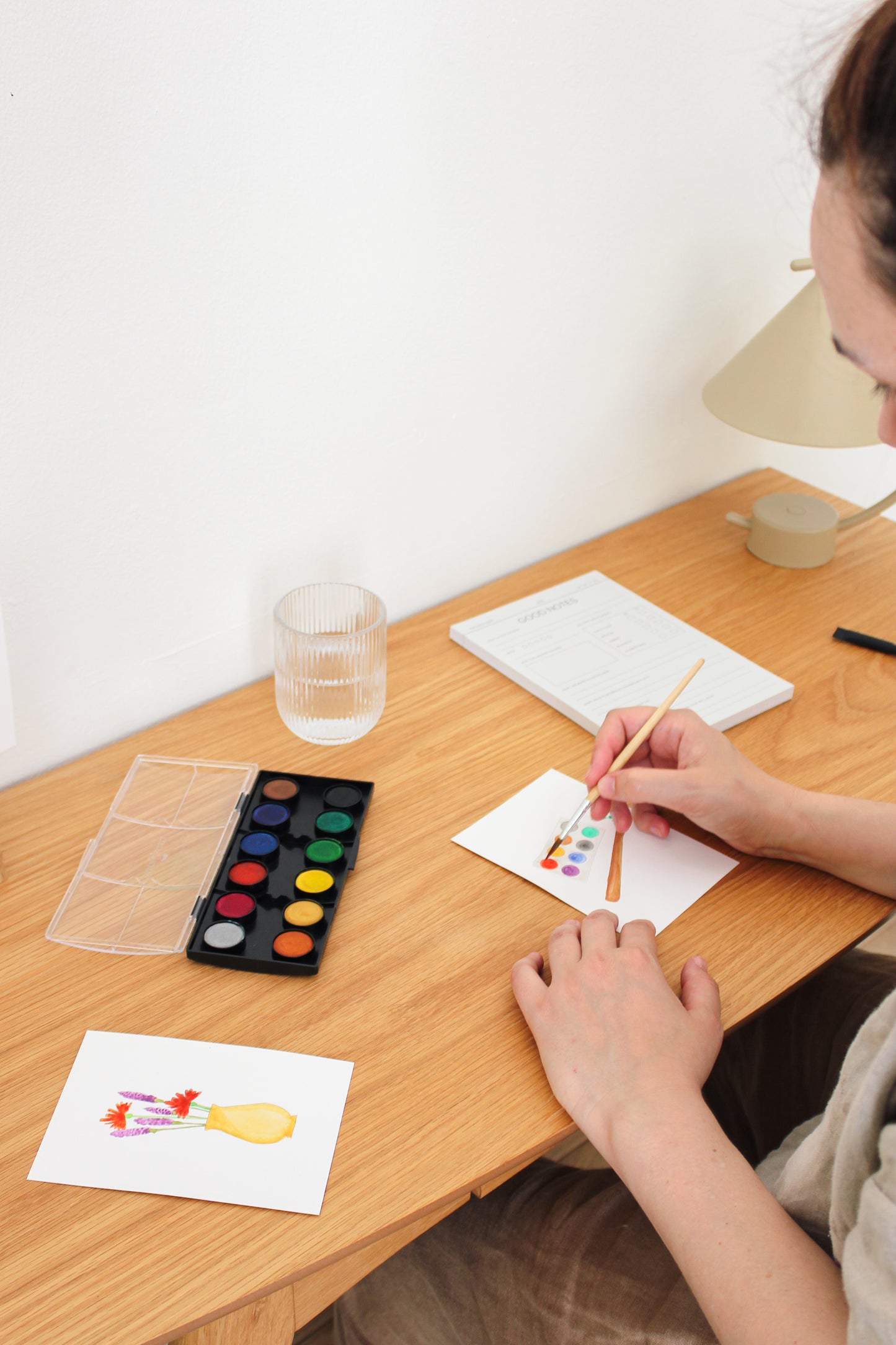
Watercolour pallette

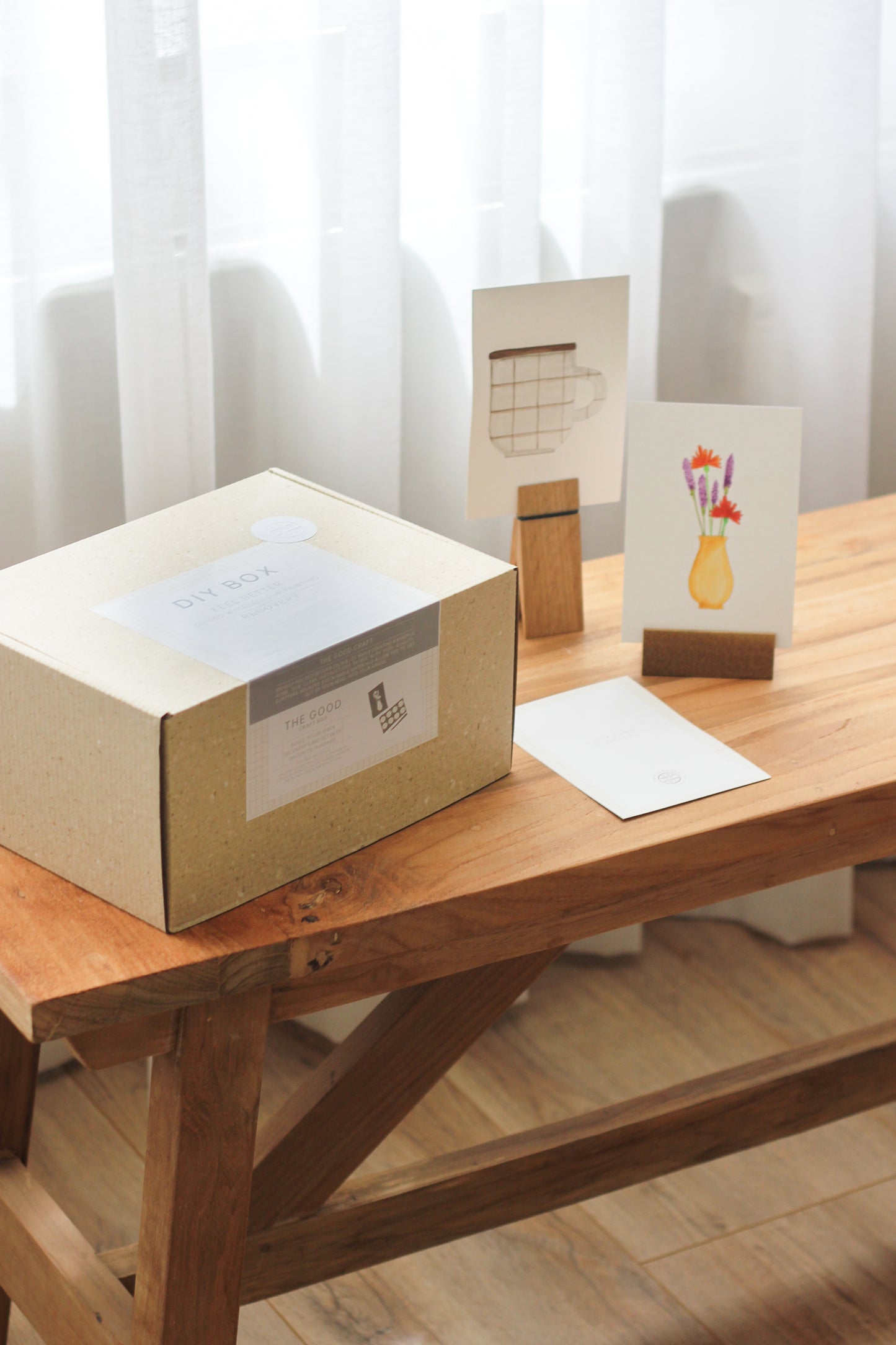
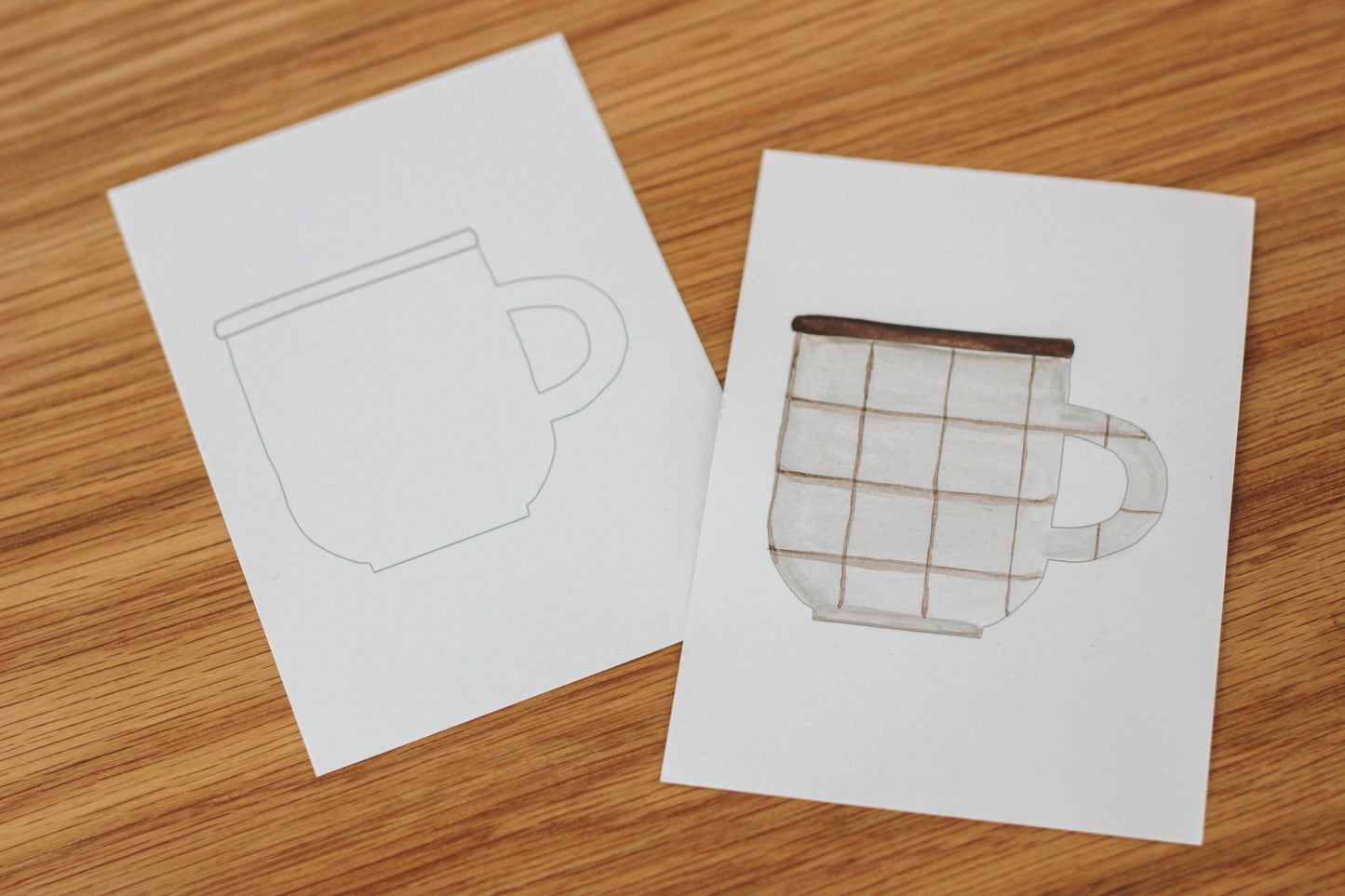
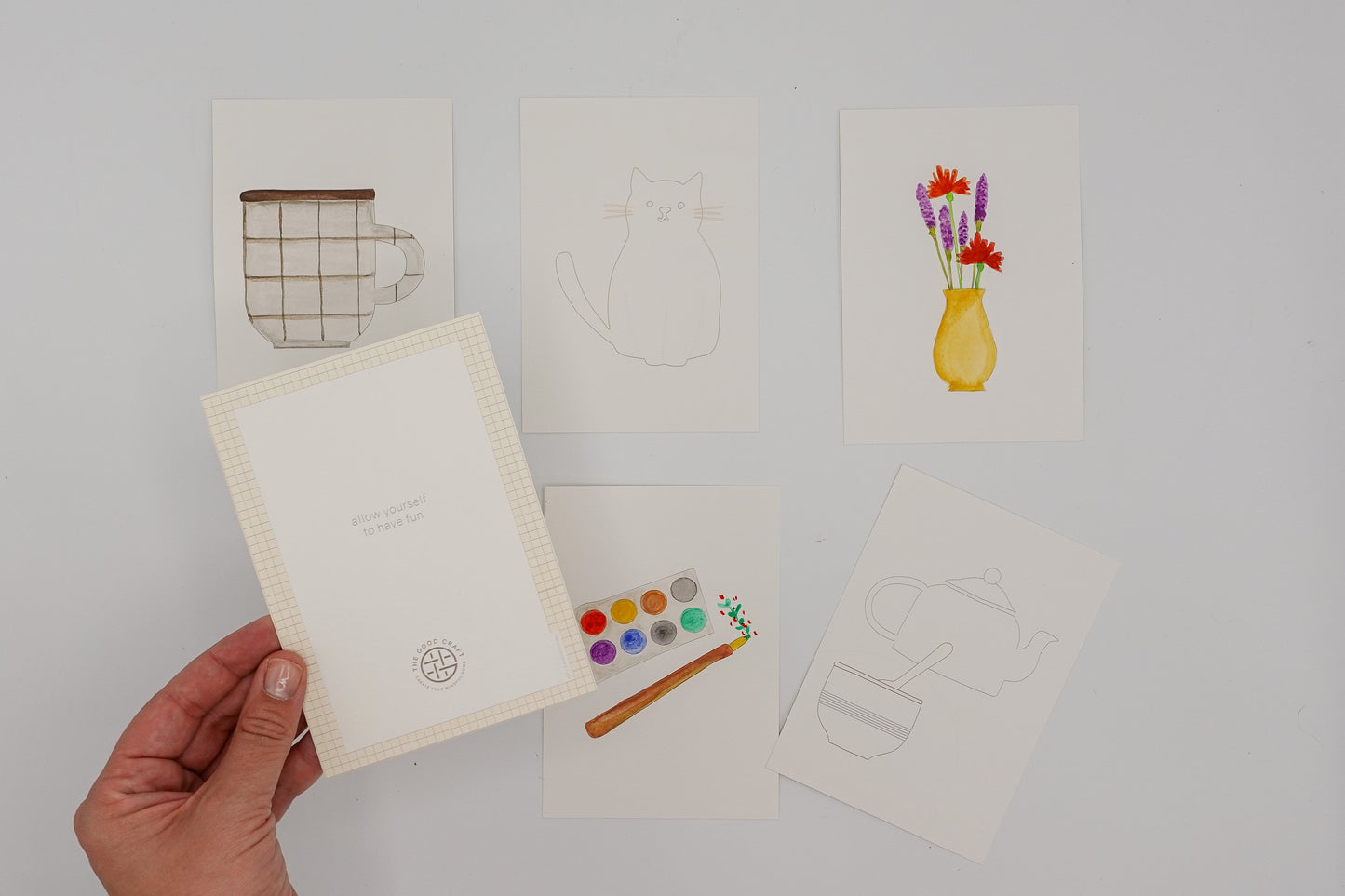
Set of recovery cards

Jar of water

Paper towel

Good to know

  • You’ll want to have everything within reach so you can focus on crafting. Check the material list in the box on the left and make sure you find a nice space where you can craft. Light a candle, put on some music and get ready for a few hours of cozy crafting.
  • Starting something while you're recovering can be hard. Don't force yourself to finish all designs at once. Maybe start with one today.
  • We are focussing on progress, so don’t worry about perfection. The cards look even better with an authentic hand painted look.
  • Work slowly and enjoy the process of making something for yourself. You deserve it.

Sit down with your thoughts

This box containes a Good Notes note pad to help with (mental) recovery. The note pad is created to write down your highlights and challenges of the week, track your mood and give you a mindful boost to stop procrastinating and start taking care of yourself. A unique addition to the gentle affirmations on the recovery cards.

  • Start by sitting down with the mental note pad. Take time to fill in the prompts and write down your thoughts.
  • Remember: highlights in a week can be tiny, especially when you're recovering. But small steps are big wins.

Reflect on your answers

After finishing the Good Notes, take some time to reflect on your answers. Brew yourself a cup of coffee or tea and sit down with just your thoughts. Writing things down is important, but reflecting on your answers is maybe even more important!

  • What stands out?
  • Which answer surprised yourself?
  • What did you write down under the last prompt? How can you make this happen? Take your calendar to plan your small step.

Choose a recovery card

Now that you took some time to unwind and reflect, we can start the creative process!

  • Choose the recovery card that you want to paint today.
  • You can choose your card based on the message at the back of the card or the design on the front that you like most.
  • Grab a glass of water and a paper towel to rinse and clean your brush.
  • Open the watercolour pallette and wet your brush. Let's start with the first stroke!
  • Watercolour painting is all about flow, softness, and letting go of control. It’s okay if things blend unexpectedly or edges blur.

Create your design

  • Always test your colours on scrap paper first.
  • Mix colours in the lid of your palette to create new colour tones. Experiment!
  • Want soft edges? Paint your new colour while the first one is still wet.
  • Want crisp lines? Let the paper dry first. Use masking tape to create crisp borders or geometric shapes.
  • Dab with a paper towel to lift colour or fix small mistakes.
  • Layering is key: let each layer dry before adding more to avoid muddy colours.
  • Pause between layers to breathe and observe.

Progress over perfection

Crafting is about more than creating something. It’s a moment to slow down, breathe deeply, and reconnect with your hands, your thoughts, and your joy. It's about experimenting. Learning new skills. As you paint the cards, you are taking time for yourself. You can be proud of that.

Extra instructions for the best result

  • Paint with intention. Don't try to rush finishing the design, but take your time to create.
  • A white gel pen or gouache can add highlights once dry.
  • Splatter paint with a toothbrush or flick your brush for texture.
  • Rinse your brush often and keep a separate jar for clean water. Water is your blending tool, not just a rinse station.
  • Begin with pale washes and build up layers gradually. It’s easier to deepen a colour than to lighten it.
  • Be patient between layers to avoid muddying colours. Use this time to plan your next stroke or sip some tea.
  • Watercolour “blooms” (those soft, feathery edges) can be magical. Let them happen, or use them intentionally for texture.
  • Protect areas you want to keep white or crisp. Masking tape can also help create clean borders.
  • A light touch gives delicate lines; pressing harder creates bold strokes. Try varying pressure for expressive marks.
  • Combine colours on your palette to create unique tones. Leaf green + a touch of cinnamon? Hello, earthy olive!
  • Watercolour has a mind of its own. Flow with it, let accidents become art, and enjoy the process more than the outcome.

About this tutorial

Video made by The Good Craft. Do not copy without consent.

Music in the video is Peace Be With You by Christopher Galovan via Uppbeat